 E-commerce
 Abonnementssystemen
 Chatbot
 Online cursussen
 Reservering
 Reisgids
 Evenementen
 Content creators
 Lokale bezorging en afhalen
 Kranten
 Radio
Radio Scholen
 Religie
 Organisaties
 Restaurant
 Boodschappen
 Zelf bouwen
 Interne communicatie

 GEEN CODE APP BOUWER
 TECHNOLOGIE
 WAAROM GOODBARBER?
 Ontwerp
 PRODUCTBRONNEN
 ONDERWERPEN
 RESELLERS VAN MOBIELE APPS
 ONTDEK
Steel dit idee: een AI-gebouwde zomerfilmquiz die je publiek écht gaat delen
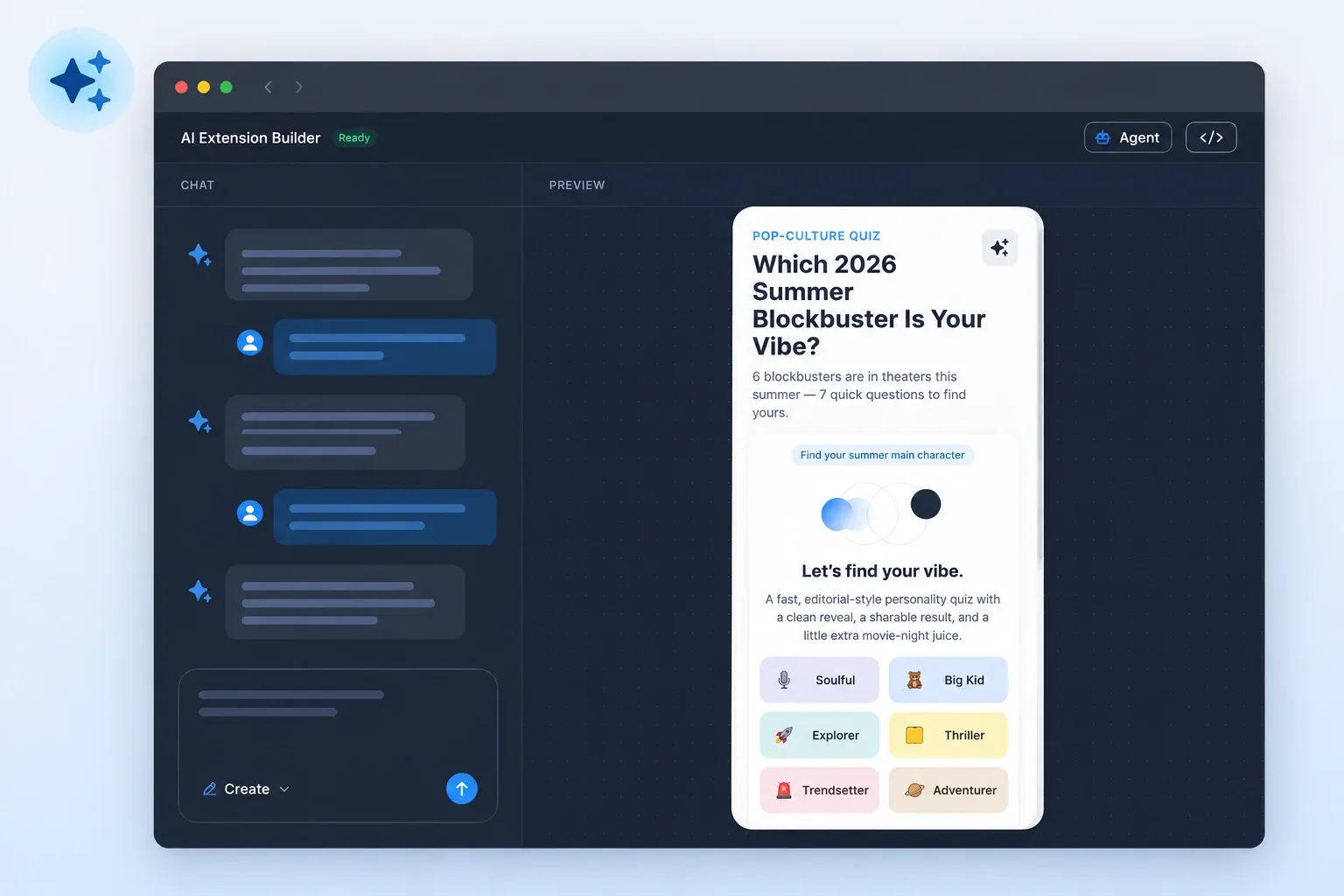
Zes blockbusters strijden deze zomer om ieders aandacht. Zo maak je daar engagement van in jouw app: een persoonlijkheidsquiz — « Which 2026 Summer Blockbuster Is Your Vibe? » — volledig gebouwd door hem te beschrijven aan de AI Extension Builder van GoodBarber. Eén prompt erin, één publiceerbare sectie eruit. Dit artikel geeft je alles: wat de quiz doet, waarom het format zo goed werkt voor content-apps, en de exacte prompt die we gebruikten — geschreven zodat jij hem kunt stelen, aanpassen en van jou maken.

De quiz
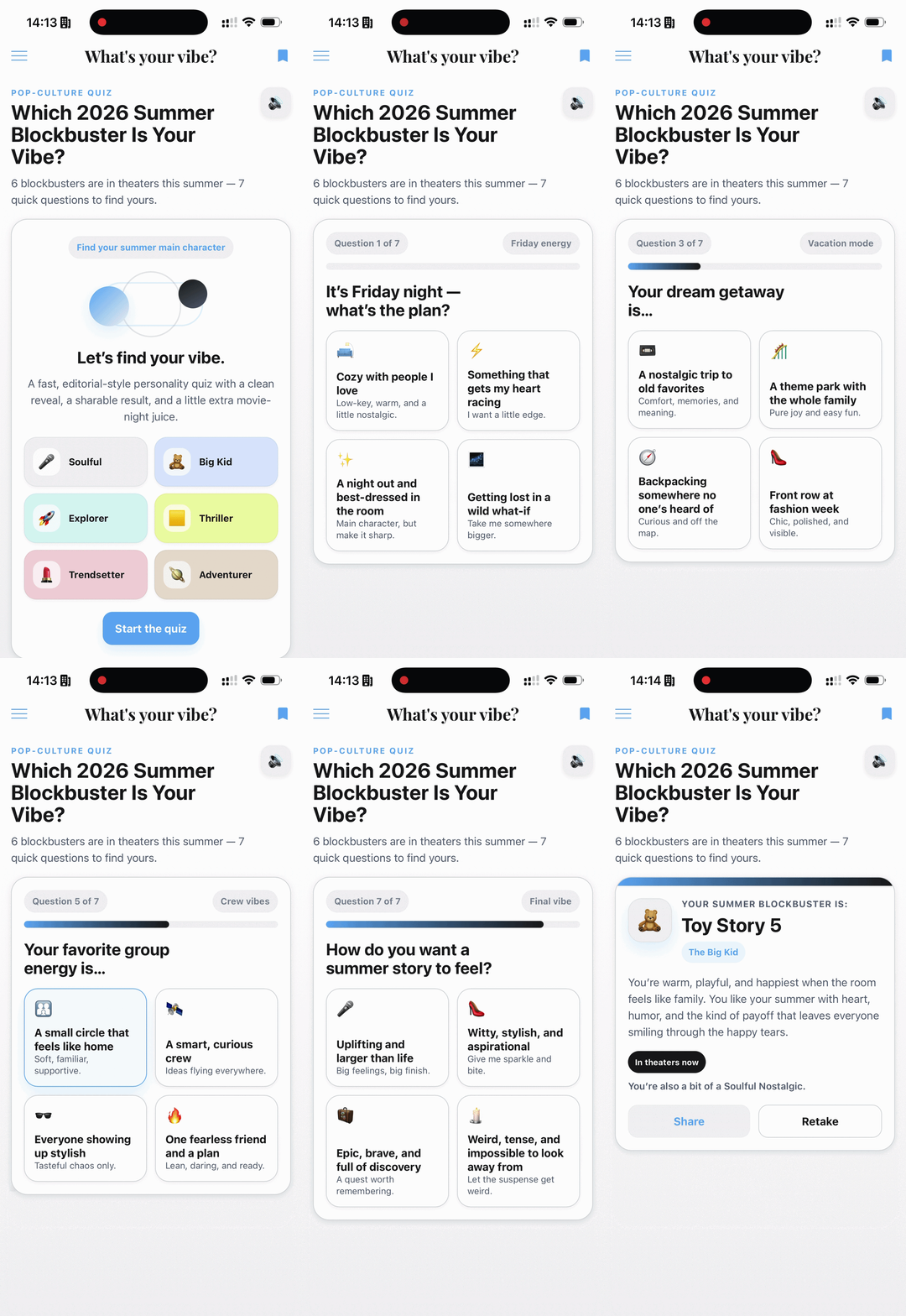
Alles begint op een krachtig introscherm: zes gekleurde mood-tegels — originele kleuren en iconen, geen posters, geen studiomateriaal — en één belofte: 6 blockbusters draaien deze zomer in de bioscoop — 7 snelle vragen om de jouwe te vinden.
Daarna zeven vragen — en geen enkele gaat over films. Dat is het geheim van een persoonlijkheidsquiz: hij gaat over jou. "Het is vrijdagavond — wat is het plan?" "Kies je zomersoundtrack." Vier tikbare antwoorden per vraag, een voortgangsbalk, vloeiende overgangen, een korte "calculating your vibe…" — en dan de onthulling: jouw film, jouw persona ("The Explorer", "The Trendsetter", "The Big Kid"…), een gepersonaliseerde beschrijving in de accentkleur van die film, plus een runner-up-regel, want iedereen is een beetje twee dingen tegelijk.
Twee knoppen maken de cirkel rond. Delen kopieert een kant-en-klare zin — "I got Project Hail Mary — The Explorer! Which 2026 summer blockbuster is your vibe? 🎬" — en Opnieuw, want de halve lol is antwoorden zoals je beste vriend zou doen.
Waarom dit format een plek in je app verdient
Persoonlijkheidsquizzen zijn niet voor niets het werkpaard van de popcultuurpers. Direct te begrijpen, vreemd onweerstaanbaar en gemaakt om gedeeld te worden — een resultaatkaart is een screenshot in wording, en elke share is jouw app die naar iemand nieuws reist.
En omdat het een sectie in je app is — geen embed van een quizwebsite — erft hij alles wat je app al heeft: je design system, je navigatie, je publiek. De engagement gebeurt in jouw product, niet in dat van iemand anders.
De prompt — steel hem
Er zit geen regel code achter deze quiz: alleen een geschreven briefing, overhandigd aan de AI Extension Builder. Hier is hij — met opzet lang (de flow, de regels, de garanties), in het Engelse origineel, licht opgemaakt om te lezen:
Als je hem aanpast: vier onderdelen doen bijna al het werk — houd ze erin:
1. Vraag om garanties, niet alleen om features. De briefing legt nooit uit hoe je de scoring programmeert. Hij stelt vast wat altijd waar moet zijn: een vaste tie-break-volgorde zodat er nooit een leeg resultaat is, elk van de zes uitkomsten echt haalbaar, snel tikken mag de flow niet breken. Beschrijf de invarianten; de builder schrijft de code.
2. Beschrijf de flow, scherm voor scherm. Intro, vragen, onthulling, resultaat: de prompt benoemt elk scherm en wat het moet bevatten. Je schrijft geen code — je schrijft het storyboard, en de builder bouwt ernaar.
3. Ontwerp voor de screenshot. "Een schone, screenshot-klare resultaatkaart" is een instructie, geen toeval. Wil je shares, vraag dan om deelbaarheid.
4. Codeer de juridische regels. Echte titels, redactioneel genoemd — en een expliciet verbod op logo's, posters, filmbeelden en personages. Alle visuals origineel. De prompt is waar "fan-redactie, geen inbreuk" wordt beslist.
Eerlijk is eerlijk: Claude hielp me mijn ideeën te ordenen en deze prompt te schrijven. Doe hetzelfde — beschrijven wat je wilt blijkt óók iets waar AI heel goed bij helpt.
Maak hem van jou
De films zijn seizoensgebonden; de machine niet. Vervang zes blockbusters door zes reisbestemmingen, zes recepten, zes trainingsstijlen, zes wijnen, zes buurten — de mechaniek (mood-vragen, gewogen antwoorden, onthulling, delen) verandert niet, en het skelet van de prompt ook niet. Dat is wat prompt-to-section verandert voor redactionele formats: ze worden iets dat je voor een moment lanceert, niet iets dat je een kwartaal vooruit plant. Een quiz voor de zomerreleases. Nog een voor het awardseizoen. Met pensioen als het moment voorbij is, opnieuw gegenereerd als het volgende komt.
Eén tip als je seizoensgebonden gaat: schrijf eerst de zes uitkomsten — persona-naam, twee regels sfeer, accentkleur — voordat je de vragen aanraakt. De vragen zijn makkelijk zodra de personas scherp zijn; zes scherpe personas zijn de hele quiz.
Verder lezen
- Bouw een spel met ranglijst in uw app, zonder code — de wildere neef van deze build.
- We let an AI write code inside our no-code platform — generating it was the easy part — de engineering die gegenereerde secties veilig publiceerbaar maakt, op dev.to.
- De AI Extension Builder — bouw secties op maat door ze te beschrijven. In bèta, open voor iedereen.
Jouw beurt
Breng de Extension Builder de feature die geen enkele catalogus je ooit zal bieden — een quiz voor jouw niche, een rekentool voor jouw dienst, een countdown voor jouw seizoen. Beschrijf hem zoals je een collega zou briefen: de flow, de regels, de garanties. Wat te beschrijven valt, kan vanmiddag al een sectie in je app zijn.
In het kort
Moet ik kunnen programmeren om deze quiz te bouwen? Nee. Alles wat hier beschreven staat — flow, scoring, animaties, delen — kwam uit de geschreven briefing hierboven, overhandigd aan de AI Extension Builder van GoodBarber. Goed prompten is productdenken, geen programmeren.
Mag ik echte filmtitels noemen in mijn app? Redactionele verwijzingen — zoals een magazine over de zomerreleases schrijft — zijn standaard fan-content-praktijk, en de prompt verbiedt al het overige: geen logo's, posters, filmbeelden of personages. Raadpleeg voor jouw specifieke geval je juridisch adviseur.
Past de quiz bij de look van mijn app? Ja. De sectie wordt gegenereerd in je GoodBarber-app en gethematiseerd met jouw kleuren — hij landt in je design system, niet ernaast.


